

For financial advisors, client outcomes are about results, not effort. Families don’t remember the plan document. They remember that they were able to afford their house, they had financial peace of mind, and their family was cared for.
The industry has focused on this idea for fifty years. Technology sped up the change, and AI is pushing it even further.
The Industry Already Made This Shift Once
Before 1975, brokerage commissions were set by regulation and advice was free—the trade itself was the product. On May 1, 1975, on May Day, the SEC deregulated commissions, and prices dropped overnight. This left broker-dealers asking: if trades no longer pay, what does?
The answer was advice. Firms shifted from transactional brokerage to fee-based advisory, and then to comprehensive planning. In 2020, Regulation Best Interest raised the standard again. The numbers back this up. Cerulli Associates reports that asset-based fees now make up 72.4% of advisor compensation, and expects 77.6% of the industry to use a fee-based model by 2026. Look at the bigger picture: the industry moved from focusing on trades to focusing on planning. Clients stopped paying for transactions and started paying for results.
Technology Moved Advisors From Trades to Plans
This shift worked because technology took on much of the work. Planning software could model retirement, tax, and estate scenarios in minutes. CRMs replaced paper files, and account aggregation saved hours of collecting statements.
Each tool absorbed mechanical work, allowing the advisor to apply judgment. Then the gains stalled. Each new system added a login, a data-entry screen, and a dashboard. Advisors found themselves with more information but less time. The tech stack grew faster than the results. Data increased, but outcomes stayed the same.
AI Is the Next Leap in Client Outcomes for Financial Advisors. AI changes the game. It takes on the work that used to slow everything down—unstructured information. Financial records, estate documents, trusts, insurance policies, and tax returns often come in as long, messy files. Until recently, someone had to read and retype the important parts. This bottleneck limited how many households a firm could serve well and how deeply they could review each case.
Now, AI reads those documents. It sorts them, pulls out the key details, and checks them against your records. It can spot gaps you might only find after several reviews.
Let AI Do the Work, So You Deliver the Outcome
Make a clear distinction between the work and the outcome. The work includes collecting, sorting, entering data, reconciling, and monitoring. AI handles these tasks well, every night, without complaint. The outcome is a real improvement in your client’s life. For example, a beneficiary designation is set in place before it becomes a problem, and a power of attorney is stored where the family can easily find it. These results require your judgment, relationships, and follow-through. Let the machine handle the routine work, and use your extra time to deliver results that software alone can’t provide.
Demand Outcomes From Your Tech Stack, Not More Data
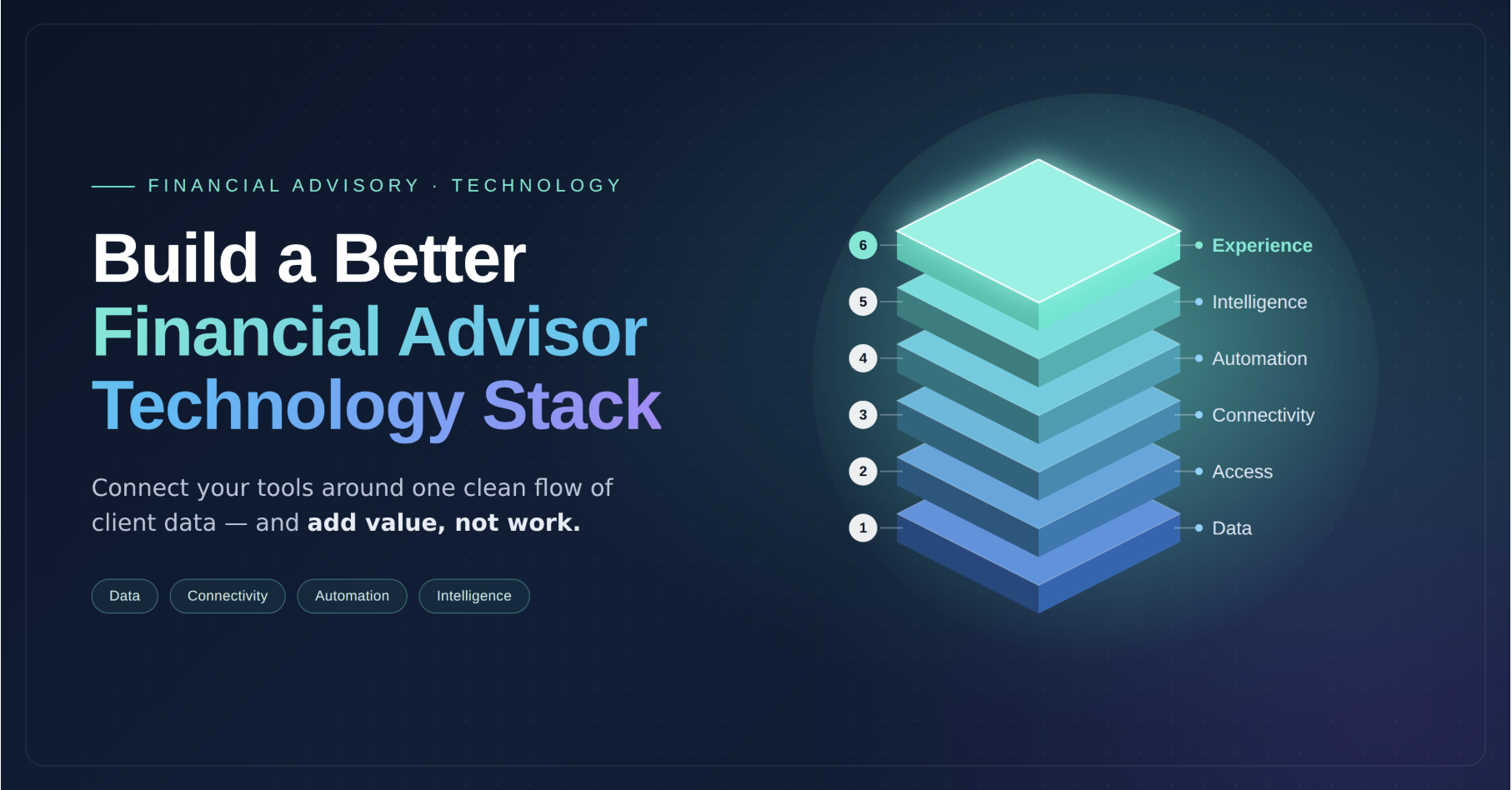
Use one standard at your next demo: does this tool create an outcome, or just more data to manage? Most advisor technology doesn’t pass this test—it just shows a dashboard and calls it value. Technology that delivers outcomes works differently. It automates data collection, so client information is centralized automatically. It personalizes what each family sees and suggests the next step, instead of just reporting.
Judge every platform by this standard. If your team has to do all the work before it helps you, you’ve bought a database—not a tool that delivers outcomes.
Be the Guide in Execution, Not Just Planning
I have heard over and over again that financial advisors feel like their client’s quarterback. Not just identifying strategies but helping make decisions and execute. This is the biggest opportunity, but most firms miss it because traditionally there have not been enough hours in the day to do everything. Advisors are good at guiding the planning process, so the plan gets built, presented, and approved. But then the client leaves with a task list, and nothing happens.
The will doesn’t get signed. The notary appointment isn’t booked. The plan was correct, but the outcome never happened. The right technology lets you guide both planning and execution. You spot the gap, know who can fix it, and introduce the client to the right person instead of giving them homework. When you guide both steps, the whole family turns to you first.
Creating static financial and estate planning documents is becoming commoditized; comprehensive strategy and execution can not. No template knows where the gaps are or what the next steps are. That’s where the advisor adds value.
How Legacy Keeper Delivers Client Outcomes
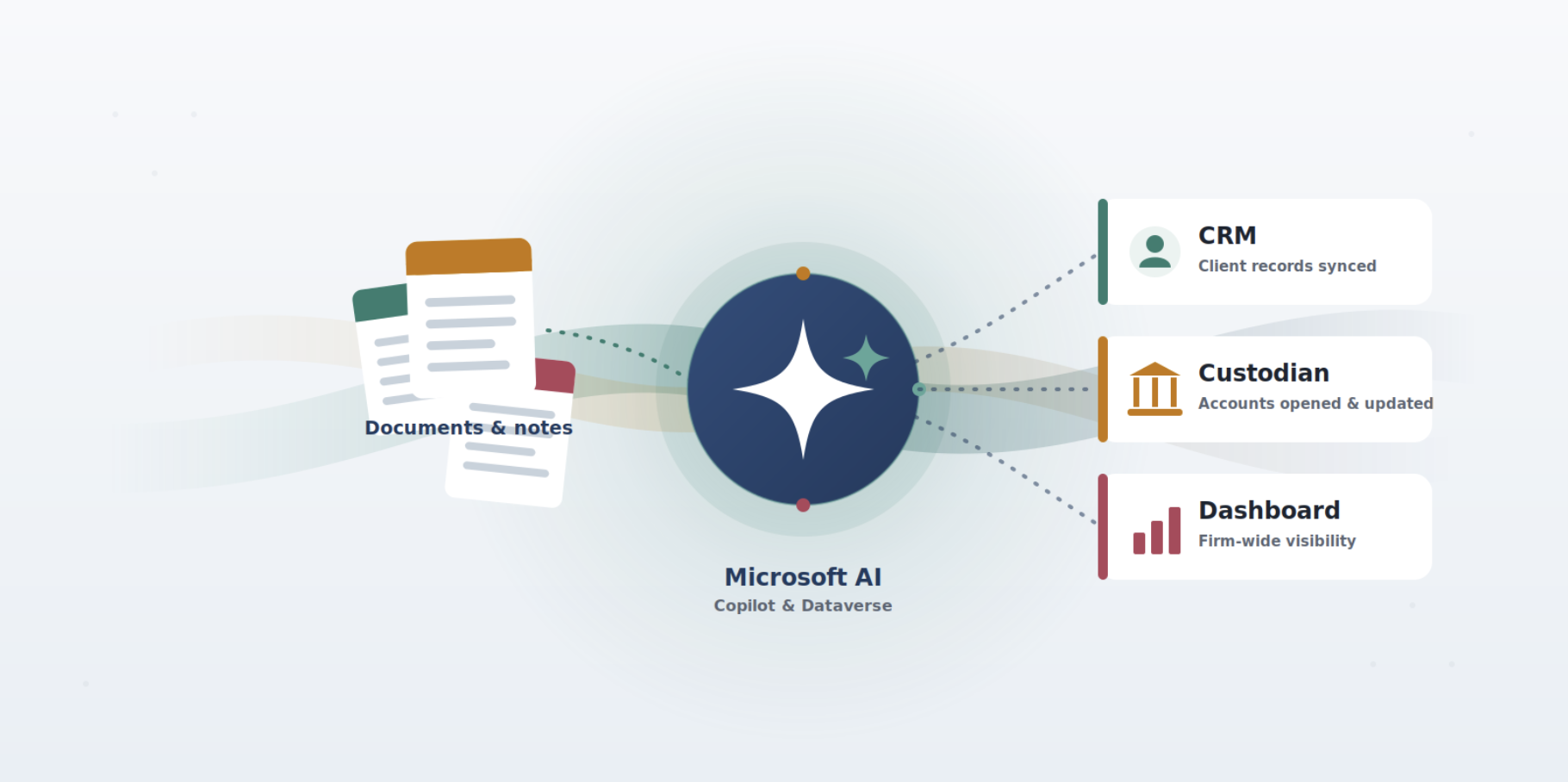
Legacy Keeper was designed with this standard in mind. It starts by automating data centralization. Families upload wills, insurance policies, corporate documents, and planning files. The platform sorts each document, pulls out the important details, and stores everything securely in one place. Next, it automates the review process. The system checks what it finds against what should be there, and flags gaps, outdated documents, or missing signatures before they cause problems for the family.
Then it completes the process through partners. Legacy Keeper works with estate planning services across all the areas families need: estate documents, funeral arrangements, notary services, insurance, and trusts. When a review finds a gap, the advisor refers the client to the right partner. Since the data is already there, users can share it in the required format for the partner. Advisors and their clients choose who to share data with. No duplicate entry, no extra database, and no extra work.
The client gets a personalized service, and the advisor delivers real results. By centralizing, reviewing, and executing, you create an outcome pipeline instead of just another dashboard. The Standard Going Forward: The industry shifted from trading outcomes to planning outcomes. The next step is to deliver executed outcomes. Technology has brought advisors this far, and AI will take them the rest of the way.
Frequently Asked Questions
What are client outcomes for financial advisors? Client outcomes are the measurable results a family experiences. Examples include a signed will, a corrected beneficiary designation, or an estate that settles without dispute. They differ from deliverables such as a plan document, which describes intent rather than the results achieved.
Why did broker-dealers shift from commissions to advisory fees? Fixed commissions ended on May 1, 1975, which collapsed trading margins. Firms replaced transaction revenue with advice revenue. The industry then moved steadily toward fee-based advisory and comprehensive planning.
How does AI improve outcomes for financial advisors? AI reads and classifies unstructured documents such as wills, policies, and tax returns. It then automatically extracts and reconciles the data. That removes the manual bottleneck limiting how many households a firm can review well.
What should advisors expect from their technology stack? Expect automation and personalization, not more screens to check. A good tool centralizes client data without manual entry. It flags what needs attention and moves the client toward action.
How can advisors help clients execute, not just plan? Use a system that tracks incomplete planning steps. It should connect clients to the professionals who complete them. The advisor then guides execution rather than handing over a task list.
References
- Fixed commission deregulation (“May Day,” May 1, 1975) — SEC Historical Society, Charles Schwab: “The action that forever altered investing”, 1975 Stock Brokerage Commission Deregulation
- Regulation Best Interest, adopted June 5, 2019, compliance date June 30, 2020 — SEC: Confirmation of June 30 Compliance Date for Reg BI and Form CRS, FINRA: Reg BI Key Topic.
- Fee-based compensation at 72.4%, projected 77.6% by 2026 — Cerulli Associates press release, from The Cerulli Edge—The Americas Asset and Wealth Management Edition, March 2025 issue.
- Industry coverage of the Cerulli findings — InvestmentNews, ThinkAdvisor
- Advisor moves to fee-based models — BlackRock: Why and how financial advisors move to fee-based
- Scaling personalization in advice — Morningstar
- Advisor AI adoption trends — Family Wealth Report: AI 2026, RightCapital: AI Tools for Financial Advisors
- Document classification, review, and service directory — Legacy Keeper
Educational only. This article is not legal, compliance, tax, or investment advice. Confirm current regulations, vendor features, and data figures for your region and agreement before you act.
Leave a Reply